Makan-makan like a Malaysian: The Aroma of Food and Echoes of History, Politics, and Society

Desmond Ng │ Lancaster University
Sugar, vegetable oil, flour, and vanilla extract… followed by the conspicuous whirring of a hand mixer: just another somewhat hectic morning making some traditional Malaysian kuih bahulu - essentially, Malaysian madeleines. I have been pining for some traditional kuih/kueh (a wide variety of cakes, desserts, and savoury snacks in much of Malaysia, Singapore, and Indonesia, which belong to various cultures) for quite some time, and it is also my personal belief that to be Malaysian is to be epicurean.
After all, Malaysia is famous for being one of the most popular food hubs in the world. In 2024, Malaysia’s breakfast culture was mentioned on UNESCO’s 'Representative List of the Intangible Cultural Heritage of Humanity', and the country is home to a diverse range of cuisines that intermingle with one another owing to generations of people, be they Malay, Chinese, Indian, Eurasian, and Indigenous, all living together under one roof.
Nonetheless, just like all things in Malaysia, food inevitably intersects much with the historical and political gravitas of the country. How Malaysians eat and see food is highly dependent on the country’s precolonial, colonial, and postcolonial experiences.

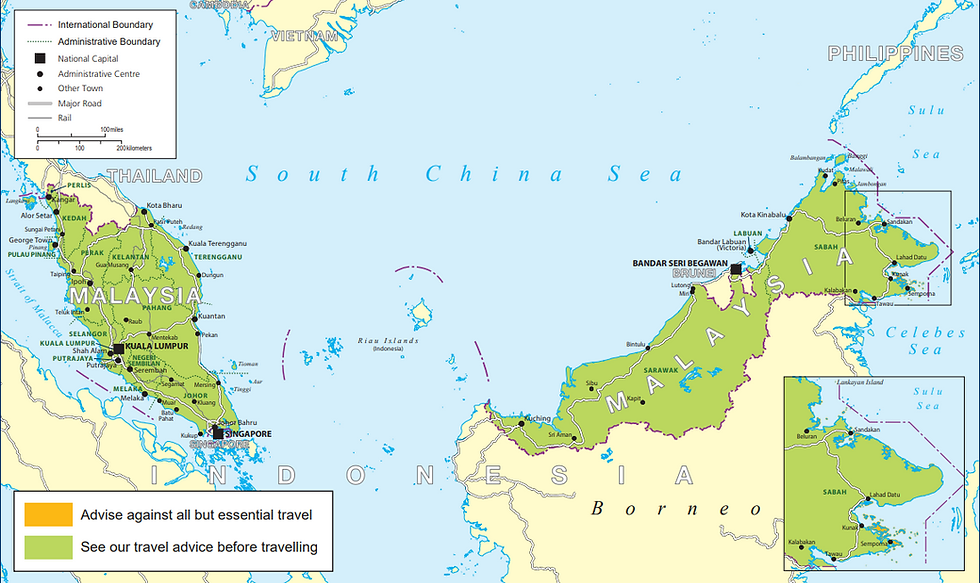
The central position of the different regions making up modern-day Malaysia in global maritime trade between communities from the Indian Ocean to the West, and the South China Sea to the East allowed for the exchange of ideas, cultures, religions, and crucially, people in this region of Southeast Asia. Inevitably, the various territories within contemporary Malaysia have always been a historical, cultural, and religious melting pot. Merchants and missionaries set up enclaves and married into local communities, which further contributed to the pluralistic environment of precolonial Malaysia. The intermingling of various cultures and religions soon gave way to the creation of a local Malaysian-Malay (and uniquely nusantara) culture that incorporates Hindu-Buddhist values and Islamic traditions.
Precolonial Malaysia had always been multicultural, but the experiences of colonialism saw more significant demographic changes in much of Malaysia. British colonialism between the eighteenth and twentieth centuries saw the introduction of Chinese and Indian migrant workers into the provinces that make up modern Malaysia, with most of them originating from the Southern regions of their respective homelands (most Chinese migrants were from Canton and Fujian, while most Indian migrants were from the South of India). These regions, as it should also be stated, have very longstanding trade relations with different communities in Southeast Asia. In the postcolonial era, Malaysian demographics continue to be very multicultural to the present day. Since the 1970s, migrant workers from neighbouring countries like Indonesia, the Philippines, Bangladesh, and Myanmar, along with refugees (primarily from Chin and Rohingyan communities) continue to diversify Malaysian society.
This exchange in ideas and culture is also reflected in Malaysian cuisine. Some notable examples are Peranakan culture, which is born from the intermingling between Chinese, Indian, and Malay cultures (the marriage between Chinese and Malays during the precolonial era led to the creation of the Baba-Nyonya community, while marriages between Indians and Malays, on the other hand, gave birth to the Chitty community). Peranakan cuisine is often considered to be highly syncretic, as its myriads of dishes (from kapitan chicken to asam laksa) combined different cooking techniques from Chinese, Indian, Malay, Thai, Dutch, Portuguese, and English traditions.
Simultaneously, foodways of the three biggest ethnic groups in the country are also products of cultural exchange in the region: Malaysian-Malay cuisine has integrated influences from Arab, Chinese, Thai, Indian, Portuguese, and Indonesian cultures, and Malaysian-Chinese and Malaysian-Indian cuisines also exhibit very similar levels of cultural intermingling. In the modern day, this culinary exchange and evolution persists, as young Malaysians and epicureans continue to experiment with fusion cuisines that reflect the culturally interwoven and complex Malaysian societal tapestry.
While Malaysia had been under the colonial rule of various powers throughout its history, British colonialism, which was far more extensive and all-encompassing than its predecessors in Malaysian history, left a lasting mark on how Malaysians conceptualise race and religion. British colonialism in Malaysia, which officially began with the landing of Francis Light on the island of Penang in 1786, was concerned with two imperatives: the need to form a Western bureaucracy and colonial capitalist system, and the suppression of local revolts, more so if they involve cross-community alliances. With these two incentives, British colonial rule introduced a far more rigid and narrow classification of the various communities in Malaysia, which used to be far more flexible and porous.
This essentialisation was made worse by the economic segregation of British colonial rule and the strengthening of anti-democratic sentiments within Malaysia. For the former, Malaysia’s different ethnic groups were segregated into specific aspects of the British colonial economy without much recourse to inter-ethnic cooperation and interaction: Malaysian-Malays were shoehorned to work in the rural kampungs (villages) as subsistence farmers, colonial bureaucrats, and members of the security forces, Malaysian-Chinese communities were consigned to work in the mines, factories, and as merchants in the burgeoning urban centres, while Malaysian-Indians worked as cash-crop plantation workers, auxiliary soldiers, and service workers.
For the latter, the British co-opted the local feudal Malay nobility and communal elites to serve within the colonial bureaucracy, and made them the 'default guardian' of their respective communities’ cultural, political, and religious interests, thereby encouraging the brand of authoritarian and sectarian politics that continue to plague Malaysia today. With specific reference to the Malaysian-Malay elites, the veteran political analyst and scholar on Malaysian politics, Bridget Welsh, certainly emphasises much on this viewpoint within Malaysia’s Political Polarization: Race, Religion, and Reform. The system introduced by the British led these elites to believe that they were 'implicitly entitled to state resources as they see fit, including for their own personal benefit'.
Ethnic and religious essentialisation, together with communal politics as encouraged by the British, soon led to the prominence of ethnic and religion-based politics in postcolonial Malaysia. This was further inflamed by the total liquidation of left-wing and liberal forces in Malaysian politics in the years immediately after the Second World War and the Malayan Emergency in 1948, following the attempts of the Malayan Communist Party at dislodging British colonial rule. Crucially, the Emergency also securitised non-Malays as inherently antagonistic to Malaysian-Malay interests and cultures. The Malaysian-Chinese, specifically, were, and still are, portrayed by Malay Supremacist and Islamists as 'Communist/foreign puppets' who are disloyal to the state.

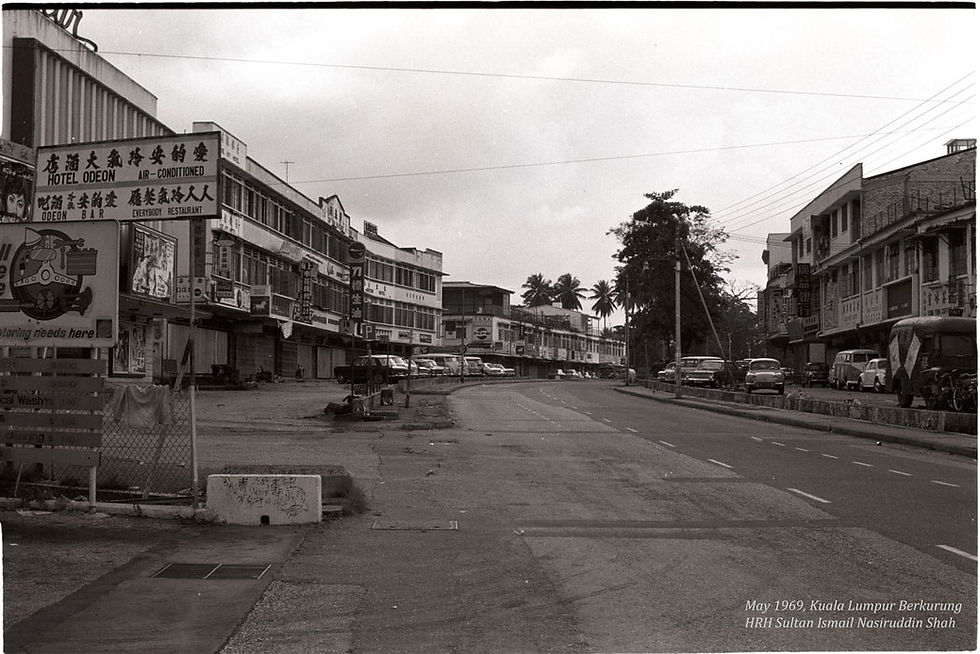
These factors soon created the perfect powder-keg for racial violence and further autocratisation and polarisation. This culminated in the 13 May 1969 race riots, which impacted the urban centres of the Malaysian peninsula the hardest and created further sectarianisation within Malaysian society. The race riots encouraged an atmosphere for the ruling right-wing bloc of Barisan Nasional (National Front, or BN; it is made up of three communal parties, the Malay-Supremacist United Malays National Organisation, or UMNO, the Malaysian-Chinese Malaysian Chinese Association, or MCA, and lastly, the Malaysian Indian Congress, MIC) regime to justify its continued existence and corrupt practices, chiefly by labelling any and all left-wing, liberal, secular, and pro-democracy political opposition as attempts at bringing back the instability of the race riots. Islamisation of Malaysian society also intensified by the 1970s and 1980s during Mahathir’s first tenure, and this only further constricted the available spaces of expression and political discourse for non-Muslims and progressive Malaysian-Muslims.
Despite the various political reforms that have taken place since the establishment of the first Pakatan Harapan (Hope Alliance, or shortened as PH) government in 2018, polarisation in Malaysia has never truly ceased. If anything, it has intensified and taken up much more diverse, and dangerous forms of expression. Malay Supremacists, Islamist politicians, and right-wing civil society group in recent years have promoted a very mythologised conception of Malaysian-Malay history and culture, especially those pertaining to the Malaccan empire and Malaysian-Malay anticolonial resistance. This can be seen in the highest-grossing film in Malaysian cinematic history, Mat Kilau (2022, dir. by Syamsul Yusof), which attracted severe criticism from non-Muslim and progressive groups for its portrayal of non-Malays as barbarous collaborators of British colonialism.
This sentiment is also clearly exhibited in Malaysian cuisine. Food items that originated within fromlocal, non-Muslim, and non-Malay populations often have their status of indigeneity and credibility as “Malaysian” questioned by Malay Supremacists and Islamist political actors. Parliamentary debates erupted in 2023 following the suggestion by some ministers over the recognition of a Malaysian-Chinese traditional dish, known as bak kut teh (a dish traditionally made with medicinal herbs, pork ribs, and other pork products - although vegetarian and non-pork versions do exist) as a Malaysian heritage dish. In fact, Akmal Salleh, a firebrand politician from UMNO, even mentioned that the minister who made this suggestion should be fired over this. The debate, in essence, spilled out from the halls of power and out into kopitiams, city squares, social media.
My thoughts are disturbed by the sudden ring of my phone timer: finally, the kuih bahulu, fluffy, golden brown, and sweet, are done! I gaze upon my completed kuih bahulu and ponder. Food, alongside other expressions of identity and culture, is now a new front for sectarianism and the battle of historical and cultural memory in Malaysia. We are a nation of beauty, ardent connoisseurs, and culture, but tragically, also a nation of bitter divisions and chauvinism. It is now up to young Malaysians of progressive tendencies to come together and create a far more tolerant and inclusive future for themselves and their descendants - with progress already being made. Young Malaysians of today have proven themselves to be more than capable at toppling corrupt governments and creating new spaces for multiculturalism and solidarity. To eat is to be Malaysian, and our heritage cannot continue to be repressed by chauvinism and communal division.
Further Reading:
Ahmad Fauzi Abdul Hamid and Che Hamdan Che Mohd Razali, 'Nativist Expressions of Non-violent Extremism in Malaysia: The Case of Ikatan Muslimin Malaysia (ISMA: Muslim Solidarity Front of Malaysia)', in The Routledge Handbook of Non-Violent Extremism, ed. by. Elisa Orofino and William Allchorn (Routledge, 2023) pp. 150–165.
Saleena Saleem, 'The Convergence of Racial Politics and Sectarianism in Malaysia', in Dividing Lines: Reimagining Social Division in ‘Divided Societies, ed. by Simon Mabon (Richardson Institute for Peace at Lancaster University (UK), 2022), pp.44-48.
Peter Wee, A Peranakans legacy: the heritage of the Straits Chinese (Marshall Cavendish, 2009).
Bridget Welsh, ‘Malaysia’s Political Polarization: Race, Religion, and Reform’, in Political Polarization in South and Southeast Asia, ed. by Thomas Carothers & Andrew O’Donohue (Carnegie Endowment for International Peace, 2020), pp.41-52.
Desmond Ng is a first-year Politics PhD student from Lancaster University. His research and interests are primarily concerned with Southeast Asian expressions of authoritarianism and right-wing politics, with a special focus on Malaysia. He is also an ardent foody who loves to dabble in cooking and baking from time-to-time.