


Beyond the Myth: Rethinking the Eunuch and the Stereotype of the Mutilated Body

Alessia Carta | University of Cagliari
Castrated or celebrated? Few identities challenge our assumptions about power and the body as much as that of the Byzantine eunuch. To modern eyes, they may seem powerless or marginalised, but was that really the case? Behind the veil of prejudice lies a far more complex reality, in which the absence of masculinity paradoxically became a source of authority.
Historical records indicate that eunuchs have been present in courts since ancient Egypt and China, where they were responsible for protecting and serving great rulers. Similarly, Byzantium employed eunuchs in accordance with this tradition. The physical characteristics of these individuals undoubtedly contributed to their employment. Their ‘feminine’ characteristics contributed to their integration into a court that had an affinity for the exotic.
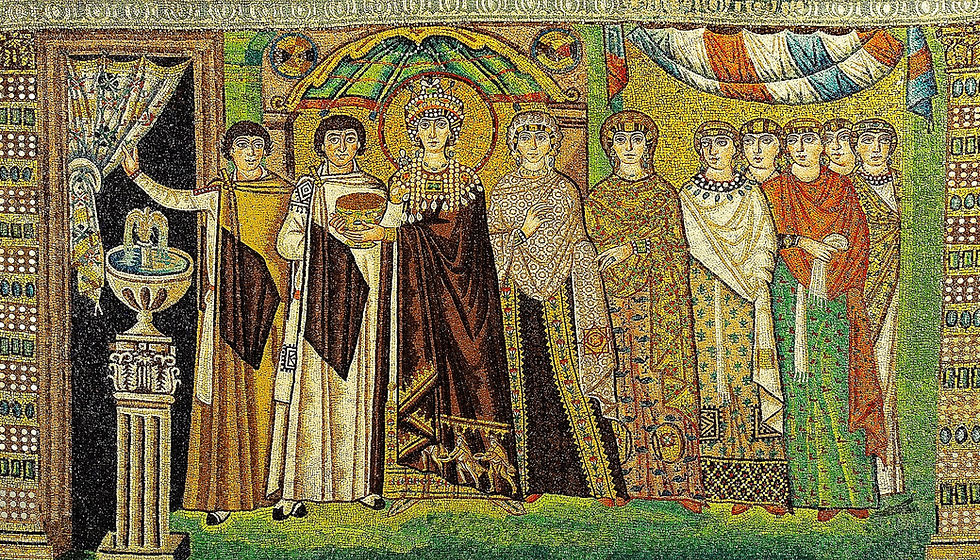
The biological and socio-political origins of eunuchs are distinct. St Matthew 19:12 provides a description: ‘«Some are born eunuchs, some are made eunuchs by men, and some choose to be eunuchs for the kingdom of heaven’. Theophylact, Archbishop of Ohrid and linguistic scholar, distinguishes between two types of castration. The first type is chosen voluntarily by an adult after puberty and is considered a grave sin, comparable to murder and contrary to nature, because it involves voluntarily changing an already established gender identity. The second type, however, concerns the castration of a child at the decision of their parents. This is seen as positive and in accordance with the divine plan. In this case, it is not considered ‘unnatural’, because the resulting eunuchs are seen as individuals who exist 'beyond nature', akin to monks and holy men. This view is based on the idea that children are not just smaller versions of adults, but malleable beings whose identity can be shaped by adults' choices and societal influences.
Castration could also be a penalty imposed to prevent the production of new heirs. This was the case with the male offspring of deposed emperors, such as Maurice, Michael I Rangabe and Leo V, but also with rebels. Many Christians resorted to self-castration to control their sexual desires, leading to the Ecumenical Council of Nicaea imposing a strict canon against the practice in AD 325. Those aspiring to a career in the church were expected to resist the temptations of the flesh by leading an exclusively ascetic life.
In the tenth century, Bishop Liutprand of Cremona provided a detailed account of the practice of creating eunuchs in the Western world. He described how boys were exported from their homelands to Verdun, where they underwent surgical procedures involving the removal of their testicles and penis. The merchants of Verdun then took these boys to Spain, where they profited significantly from this trade. The event in which Liutprand gifted some young eunuchs (carzimasia in Greek) to Constantine VII demonstrates the connection between the employment of eunuchs and their sexual activity, which, although undoubtedly limited, was generally considered acceptable. The life of Saint Andrew the Madman (tenth century CE) documents that he was forced to engage in sodomy in his master's bedroom. In response, St Andrew declared that all slaves who resisted this abominable passion would be blessed, thrice blessed, and counted among the martyrs. Notably, eunuchs exhibited sexual desire despite frequently being accused of assuming a passive role in homosexual activities and being perceived as encouraging sodomy. Castration is widely accepted as a barbaric act, as are other forms of physical mutilation. However, it is important to acknowledge that, from a Byzantine perspective, such mutilations were considered a preferable alternative to the death penalty.
The Byzantine Church accepted the presence of castrated men among its clergy and they occupied important roles within female religious communities. However, some male monasteries restricted or even prohibited the presence of eunuchs, as they were considered a potential source of sexual temptation for the monks. In the Byzantine imagination, eunuchs were often viewed as gender ambiguous, with smooth skin, high voices and a lack of facial hair that closely mirrored classical ideals of youth or femininity.
Consequently, monastic legislation (typika) often grouped eunuchs with beardless adolescents as a visual distraction to the monks’ pursuit of apatheia (freedom from passion) aimed at empowering individuals to respond rationally rather than react emotionally. The monks feared that the eunuchs’ presence would incite homosexual temptation within the isolated, all-male environment. Linguistically, eunuchs were primarily described in terms of what they were not. They were defined as 'incomplete men', lacking masculine characteristics, and were often associated with negative female stereotypes. This negation served to exclude them from traditional gender categories. But despite social disdain, eunuchs were recognised for two fundamental 'positive' attributes: they were considered intelligent and cultured, and capable of learning complex tasks. This lucidity was attributed to their asexuality; free from sexual desire, they could devote themselves entirely to intellectual pursuits. Eunuchs were also identified with the figure of the 'Perfect Servant'. Unlike ordinary men, they were completely dedicated, and their 'freedom of thought' (not being tied to family interests) made them honest and reliable advisers. There is a fascinating contrast here between their low social status and their high functional value: traits such as obedience and meticulous service were prized in a subordinate but considered 'unmanly' for an aristocrat or freeman.
Yet, thanks to these very qualities, many eunuchs (such as Narses and Basil the Nothos) held high-ranking positions in the army, bureaucracy, and even the Church, becoming revered figures and patriarchs. The most striking aspect is the linguistic parallel: the same language of negation used by the Byzantines for eunuchs was also applied to angels, Christ, and God, as Kathryn M. Ringrose suggests. This implies that, while the ambiguity of the eunuch was socially demeaning, it paradoxically placed him in a dimension that transcended the ordinary human
By looking at the attributes assigned to these celestial beings, we can see clearly how this linguistic phenomenon worked. For instance, angels are described as ‘ageless’ (and therefore youthful), ‘immortal’ and ‘unceasing’. This divine nature is further defined by qualities such as being ‘unstained’, ‘intangible’, ‘incorrupt’, ‘free from suffering’, ‘insubstantial’, ‘undefiled’, ‘incorporeal’, and ‘imperishable’.
The eunuchs were granted numerous privileges as a result of a number of factors, including the perception that they were unwaveringly loyal to the ruling dynasty. Consequently, Byzantine eunuchs were often able to amass considerable wealth and master a variety of arts, which inevitably enriched the court. They were thus responsible for caring for the emperor or empress, protecting the women of the ruling dynasty, and organising court ceremonies. Some were even permitted access to the emperor's private chambers. Historians frequently critiqued the prominent role of eunuchs within the court, perceiving an excessive concentration of power in these figures, some of whom attempted to exert control over their rulers.
However, despite this being a global phenomenon, it was only the Byzantine eunuchs who were fully integrated into society. While many eunuchs were employed at court, many also secured prominent roles in ecclesiastical, military, and administrative domains, as well as in the residences of prominent families within imperial territory. This is why many families considered the positions offered to eunuchs to be a genuine prospect for securing a position within the imperial court.Far from being victims of their condition, the eunuchs of Byzantium redefined what power could look like. Their lives blurred the line between the sacred and the profane, between submission and control. They revealed that history's ‘mutilated bodies’ often wielded influence through intellect, discretion, and silent cunning but the presence of eunuchs is in no way limited to Byzantine society. In the eighteenth century as many as four thousand boys were castrated each year in Italy and 70% of all opera singers were castrati. The practice of pre-pubescent castration was used to preserve high vocal ranges while still allowing the development of adult lung capacity. It began in the late sixteenth century as a way of bypassing prohibitions against women singing in church choirs and, later, in some Italian theatres. Although the procedure was officially illegal, it was performed 'behind closed doors' by surgeons or barbers, often resulting in high mortality rates.

At the time of the establishment in 1644 of the Qing dynasty, it was estimated that the total number of eunuchs in China had reached 100,000 in a total population of about one hundred and thirty million people. Nobody knows when and how eunuchs were first institutionalized in China except that castration was frequently used as a substitute for the death penalty. In China, palace eunuchs were called huanguan which was a recognised as an official title during the Shang dynasty (1765-1222 BCE). The first notorious eunuch who drew the attention of ancient chroniclers was Pei, who, according to the historian Zuo Qiuming, served under three mutually hostile dukes during the sixth century BCE and became a stereotype eunuch: a person of sycophancy, ruth-lessness, treachery, greed, and luxury.
The role of eunuchs evolved from administrative formalisation under the Qin dynasty to extreme political and military power during the Eastern Han (25-220 CE) and Tang dynasties (618– 907 CE), with eunuchs even deciding imperial succession. However, this influence also led to mass violence and the collapse of dynasties. This prompted the subsequent Song emperors to impose strict controls, relegating the eunuchs to the role of mere servants. Despite initial limitations, the eunuch general Tong Guan eventually commanded an army of eight hundred thousand men. He was later blamed for the fall of the Northern Song dynasty. During the Mongol era (1271-1368 CE), eunuchs played a less political role, but were still crucial to major projects, such as the construction of the Imperial Canal and the hydraulic infrastructure. It was during this period that the official title of Taijian (Great Eunuch) emerged. Hongwu, the founder of the Ming dynasty, then attempted to eradicate their power by banning them from studying, limiting their numbers, and ordering that anyone who interfered in politics would be executed. However, Hongwu's orders were quickly ignored. To consolidate his coup, Emperor Yongle relied on eunuchs, rewarding them with high military positions.

Through the establishment of the court school, eunuchs were able to dominate the Ming bureaucratic apparatus once again. Forced literacy enabled them to become imperial secretaries and political mediators, allowing them to regain complete control over the court. The number of eunuchs increased exponentially, not just due to growth in the general population: while there were around 100 at the beginning of the dynasty, this figure had grown to over one hundred thousand three hundred years later. While traditional Chinese historians examined the phenomenon through an orthodox moral lens, attributing this exponential increase to political corruption, modern historians have adopted a socio-economic approach to analyse its underlying structural causes. The tragedy of the Ming eunuchs was not merely political, but rather a symptom of an economic crisis in which silver and tax reforms forced the poorer classes to sacrifice their children in order to survive. Castration became a survival strategy in this landscape of rural desperation, ceasing to be merely a punishment or a forced choice. Thousands of poor families saw sending a son to court as the only way to avoid starvation. Here, castration was required to ensure the absolute certainty of imperial lineage within the harem, and to produce a class of servants who were completely dependent on the sovereign and had no family ties or dynastic ambitions of their own.

In the medieval Islamic context, castration was generally prohibited by Islamic law when it was carried out on al-Alhar Muslims. These free-born individuals possessed full legal rights within the community, standing in sharp contrast to al-‘Abid, who were legally defined as property despite certain rights guaranteed by the Quran. This prohibition was partly due to the procedure's dire consequences, including high mortality rates (up to nine out of ten) and severe physical and psychological effects on survivors. There were also traditions attributed to the Prophet that condemned both those who castrated others and those who underwent the procedure themselves. However, a legal 'grey area' emerged whereby the purchase of non-Muslim eunuch slaves, who had been castrated outside of Islam, was often considered legal. This permitted the proliferation of eunuchs as a servile category between the eighth and sixteenth centuries.
Eunuchs could reach high positions; they were employed as administrators and sometimes as state leaders precisely because they had no lineage and were therefore considered more reliable. Some were even involved in protecting Islamic holy sites (such as Mecca and Medina), thanks to their ability to manage the presence of men and women without sexual implications.
Over time, the practice became associated with broader moral issues, particularly those relating to sexual abuse and eunuch prostitution, which were sometimes tolerated but criticised by religious circles. The role of the eunuchs was also closely tied to a defined physical and cultural space: the household. In particular, they are responsible for preventing fitna, a term that refers to social disorder and conflict in the medieval Islamic context, as well as sexual and moral temptation that undermines community order. In this context, eunuchs control who enters the domestic space, thus limiting interactions such as seeing and being seen by women, and arousing desire in those who view them. They effectively act as a fundamental instrument in preventing such disorder and contributing to the stability of the domestic and political systems.
Overall, an analysis of different historical contexts shows that the role of the eunuch cannot be reduced to one of marginality or servility. On the contrary, their exclusion from full social belonging is precisely what makes them essential. Their recurring presence in power structures, in the management of domestic and sacred spaces, and in imperial administrations highlights the strategic role they played in mediating social, political, and gender boundaries.
Further reading:
Judith Herrin, Byzantium: The Surprising Life of a Medieval Empire (Milano: Rizzoli, 2007).
Kathryn M. Ringrose, The Perfect Servant: Eunuchs and the Social Construction of Gender in Byzantium (Chicago: University of Chicago Press, 2003).
Shaun Tougher, Eunuchs in Antiquity and Beyond (London: Duckworth, 2002).
Shih-shan Henry Tsai, The Eunuchs in the Ming Dynasty (New York: Columbia University Press, 1996).
Alessia Carta is a History major at the University of Cagliari. While their studies span Roman, medieval, modern, and contemporary European history, they specialize in the History of Sardinia, leveraging their university’s unique geographic and cultural position. Alessia is particularly focused on Sardinian medieval history, with a specific interest in the Judicates (Giudicati). They explore these unique autonomous kingdoms as a singular political experience that offers a distinct and vital perspective within the broader framework of the European Middle Ages.


