


‘The little village that first gave it birth’. Turton and the World's Game

Updated: Dec 1, 2025
Jude Rowley | University of Exeter
The small Lancashire village of Turton, also known as Chapeltown, is steeped in history. Within a mile radius, the village hosts a neolithic stone circle, a Tudor manor house, a nineteenth century mill chimney, and a Second World War defensive pillbox. Perhaps its most historically significant landmark, however, is one of its most non-descript: a football field in the centre of the small village. It is through this field that Turton boasts a claim to be the birthplace of the modern game of football, now played and followed by billions of people across the world.

Variants of football have been played throughout Britain since at least the Middle Ages, such as the ‘mob’ football traditionally played at Shrovetide between groups of men from neighbouring parishes. The earliest record of such a game near Turton is of a fixture between sides representing Darwen and Tottington on Collop Monday (the day before Shrove Tuesday) in February 1830 near Round Barn in the neighbouring village of Edgworth, apparently an established local tradition. The game bore little resemblance to football as it would be recognised today, and rules were conspicuous by their absence. The ball could be carried by hand, a running player could be stopped with a punch rather than a tackle, and Tottington tried to get away with as many as twenty-five clog-shod players. The 1830 iteration was an especially bad-tempered affair and ended in an uncertain result with the Darwen players fleeing to collect and spend the £5 prize held for the winning team at a local pub. To settle the dispute, a return fixture for double the stake was called the following month at Turton, on the same chapel fields where the football ground in Chapeltown now stands. As a result, this ground can claim to be the oldest in the world known to still be in continuous use.
It can also make a claim to be the birthplace of football hooliganism. Not only did sections of the 5000 assembled supporters attack the Darwen opposition with ‘stones, sticks, staves, hammers and cleavers’, but the houses of Darreners who lived in Turton were also vandalised after the game. One spectator compared the games and their aftermath unfavourably to his experience as a soldier in the Napoleonic Wars, recalling to the Darwen News that ‘id wer lahk Backle o’ Watterloo’.
This fit Turton’s notoriously violent reputation, derided in a 1789 poem penned by local resident, William Sheldrake. After he was badly beaten by ‘ruffians’ at Turton’s annual fair, held on the same fields where football was later played, Sheldrake denounced Turton as ‘a paltry looking village’ inhabited by ‘worthless wretches’ with a reputation for ‘brutal fights’. Of particular concern to Sheldrake was the violence and immorality of the village youth, a concern perhaps unsurprisingly shared by the village schoolmaster eight decades later, W.T. Dixon.
Before arriving in the boisterous village of Chapeltown, Dixon had trained at St John’s College in Battersea where ‘straightforward Christian manliness’ was emphasised as the ‘Battersea spirit’. In this same spirit, his counterparts at public schools were promoting organised sport as a moralising influence and an alternative outlet to fighting. This had influenced attempts to introduce codified rules to the previously unruly game of football, such as those of the Football Association (FA), first played in Battersea in January 1864 while Dixon was at St John’s, and Harrow School, where a rudimentary form of football was compulsory to teach pupils ‘manliness and honour’ through sport.
Among these pupils were two grandsons of James Kay, Turton’s local squire and textile magnate. The elder of these, John Charles Kay, returned to Turton in 1870 with an interest in the Harrow variant of the nascent game. However, he lacked fellow old Harrovians to play it with in his home village, despite Harrow-educated sons of wealthy mill owners establishing their own local clubs to play the code in Brookhouse (Blackburn) in 1869 and Darwen in 1870. Kay therefore made an ideal first recruit for Dixon’s attempt to instruct the local youth in the emerging game.
With Kay, Dixon gathered 48 local men in the recently vacated old schoolhouse in December 1871 and oversaw the foundation of a village team, Turton Football Club. Initially, given the infancy of the game in Lancashire, Turton lacked opposition to play against and from 1872 held an annual summer sports day alongside their footballing activity. Many of the prizes, from the hurdles to the silver cup for ‘neatest costume’, were awarded to J.C. Kay, but the competition also presented working-class men from Turton and surrounding areas with an opportunity to win considerable sums of money through sporting activity.

When Turton did play football in these early years, it was not the game as it would be recognised today. Every club played to their own rules and Turton’s were based on those of Harrow until 1873. Players were permitted to use their hands to catch the cylindrical-shaped ‘ball’ and the goals or ‘bases’, which were half the width of the modern twenty-four feet, had no crossbar and were marked with lampposts taken from the nearby Chapeltown railway station. ‘Charging’ was permitted, but ‘shinning’ was not.
Inevitably, football in this period was dominated by confusion over rules, with no codified standard even at a local level. It was not uncommon for clubs to play to different rules depending on their opposition, or in some cases even to switch codes at half-time.
To resolve the rules confusion, in August 1874, Turton switched exclusively to the FA rules, becoming the first association football team in Lancashire. Their refusal to play local opposition under any other code eventually encouraged the rest of the county to adopt the same rules. This was formalised in September 1878 when Dixon met with Thomas Hindle of Darwen and John Lewis of Blackburn Rovers at the Volunteer pub in nearby Bromley Cross to initiate the formation of the Lancashire Football Association. This gave Turton a platform on which to become a leading force in the game, and the village briefly became one of the football capitals of Lancashire, hosting county matches such as a 4-2 win for Lancashire over North Wales in March 1880.
Turton matches at the ground could be similarly high-profile affairs. Turton were knocked out of the 1879/80 FA Cup in front of 3000 spectators in a 6-0 second round home loss to Nottingham Forest, who a century later would be double European champions. Despite its small size, the appetite for football in Turton rivalled that anywhere else in the county and such was the demand that Turton were one of the earliest football clubs to charge an entry fee. When Everton visited the Chapeltown ground for a 3-1 loss to Turton in the 1882/83 FA Cup second round, they encountered supporters paying to watch football for the first time, despite being a city club compared to the rural home opposition.
Success did little to assuage Turton’s early violent reputation, however. In 1880, Turton were encouraged to ‘mend their manners’ after a hotly contested Lancashire Cup tie against Blackburn Rovers saw them accused of deploying unsportsmanlike ‘win, tie, or wrangle’ tactics. Serious injuries on the football field were not uncommon in Turton games around this period, as demonstrated when Yates of Eagley had his leg broken by a challenge from Turton's Hamer in a Bolton Charity Cup tie in 1884. Two years earlier, a heavy charge from Turton's Howarth in an away game at Darwen had broken the collar bone of an opposition player called Kershaw, who as a reserve player was not insured against injuries sustained on the football pitch. This hints at the precarious nature of the game in this period, with injuries posing a serious threat to the livelihoods of the working-class men who made up the bulk of players in Lancashire teams.
Benefit games held to raise money for players therefore became a lifeline, despite FA disapproval. One such game was held at Turton in 1878 in aid of Darwen’s captain, W.T. Walsh, who had been unable to work since breaking his leg in a game against Church months earlier. Football provided no source of income so the risk of losing their livelihood left players in a financially vulnerable position, in contrast to the high-paid stars of today. In this same game, the Turton goalkeeper was accused by the Darwen press of making bets with spectators behind the goal. Unorthodox means like this were the only option players had to supplement their income from the game as Turton players were unpaid and received only a shilling per match for expenses.
In this age of amateurism, paying players was not only frowned upon by the wealthy public school clubs but explicitly banned by the FA. However, it was an open secret that clubs were not only covertly paying their players but also importing talented men from other areas to improve their teams. This was the subject of a 2020 historical drama series, The English Game, which followed two working-class Scottish footballers, Jimmy Love and Fergie Suter, who moved to Darwen and were secretly paid for their services.
The series does not cover, however, that both players also briefly played for Turton FC. Two weeks after their Darwen side lost a controversial quarter final to the FA-favoured Old Etonians, Suter and Love were recruited to feature for Turton in the March 1879 final of the Turton Challenge Cup, a 1-0 loss to Eagley. Suter was paid out of Turton’s £3 prize money, demonstrating the veiled professionalism that was an established practice among Lancashire teams.
When Blackburn Olympic beat Old Etonians to win the 1882/83 FA Cup, followed by three consecutive cup wins by Suter’s Blackburn Rovers, it was clear that the centre of gravity in the game was shifting away from the wealthy old boys sides to the working-class teams from Lancashire, who could not afford to play for honour alone.
Demanding the right for players to be paid, Turton and the other Lancashire clubs, excluding Darwen and Rovers, announced their intention to break away from the ‘autocratic’ FA and establish their own British Football Association in 1884. They elected a provisional committee, with Turton’s J.J. Bentley among the representatives appointed, to demand that players be paid wages. Faced with a terminal rift in the game, the FA relented, and professionalism was legalised in 1885.
Ironically, this marked the beginning of the end for Turton, who were soon surpassed by better funded city clubs. In contrast to the headline ties of the 1870s, by the early years of the twentieth century, Turton were competing against reserve teams from clubs like Manchester United, Manchester City, and Liverpool in the Lancashire Combination. By 1907, the club faced existential financial difficulties, despite winning the Lancashire Junior Cup four times between 1900 and 1905 and, like the injured players of a generation earlier, relied on a benefit game to raise funds. The current Turton XI played a team of old Turtonian all-stars. This team included big names like Joe Leeming of Bury and Charlie Sagar, the leading forward for another Lancashire club: Manchester United.
As this suggests, the ground and the club were not Turton’s only contribution to football. Local-born Sagar had joined Turton as an 18-year-old before moving to Bury, where he twice won the FA Cup. He became an England international in 1900, scoring on his debut against Ireland at Lansdowne Road, and was then bought by United ahead of the 1905/06 season. Sagar scored a hat-trick on his United debut, a feat that only Wayne Rooney has repeated, before providing twenty goals in twenty-three appearances in his first season to help win promotion to the First Division.

Off the pitch, however, the game was becoming big business and was increasingly clouded by disputes over money. It had taken a Football League committee hearing to settle Sagar’s transfer to United, which saw the initial £300 fee demanded by Bury reduced to £100. These transfer fees, which after 1905 began to exceed £1000, were not filtering down to the players, who were still subject to a maximum wage cap of £4 per week.
Players also still had little financial security or protection. This was made clear when United’s Tommy Blackstock collapsed and died on the field after heading the ball in a 1907 reserve game. It was recorded that the otherwise fit and healthy twenty-five-year-old had died of ‘natural causes’, so the only compensation his family were eligible to receive was a ‘resolution of sympathy’ from the Lancashire Combination. In response, his United teammates, including Sagar, unionised on the initiative of superstar outside right Billy Meredith and formed the Players’ Union to demand improvements to their working conditions. The prospect of a football players’ strike was enough for the FA to suspend all unionised players by 1909, including the entire United team.
In the process, the Players’ Union clashed with the President of the Football League, J.J. Bentley, who had presided over the Sagar transfer hearing. Bentley had been an early champion of professionalism in football but began to waver when faced with the prospect of players being banned from the game, not least as a director of Manchester United.
United was not the only thing Bentley had in common with Sagar. He was also a native of Chapeltown and was possibly its most influential footballing son. He had cut his teeth as a player at Turton, one of three sons of the local grocer who had all joined the team in its early years. Bentley had been considered a young prodigy, and as a teenager was commended by the national papers for a particularly inspired performance in the 1879 loss to Nottingham Forest. By his early twenties, he had hung up his football boots and taken over as Secretary (then equivalent to a modern-day manager) of Bolton Wanderers. Bolton had been introduced to both association rules and their white and blue kits by Turton, and Bentley would lead them to the 1894 FA Cup Final. There are few roles in football at this time he did not hold, combining his managerial duties with sports journalism, refereeing, and football administration at county and national levels. He became a key figure in the formation of a national Football League, which sought to replace the ad-hoc county level matches held before 1888 with an organised football pyramid. Bentley was appointed its President in 1894 and continued in this role even after being appointed to the board of Manchester United in 1902.

At United, Bentley’s influence was far-reaching, and on his recommendation, Ernst Mangnall from the neighbouring village of Belmont was appointed Secretary to steer the club out of its crisis years. This proved to be a pivotal point in the history of the club. Mangnall managed United to their first two league titles and FA Cup, before Bentley was appointed to replace him as Secretary in 1912. Bentley steered the club to a fourth-place finish in his first season, before stepping down from first team duties due to ill health after a 1-1 Boxing Day draw against Liverpool at Anfield in 1914.
A career that had started on Turton FC’s ground in Chapeltown thus finished at Old Trafford, with United on the rise and Turton in terminal decline. Bentley died in November 1918, meaning the course of his lifetime had encased the entire rise and fall of Turton and its influence on the game.
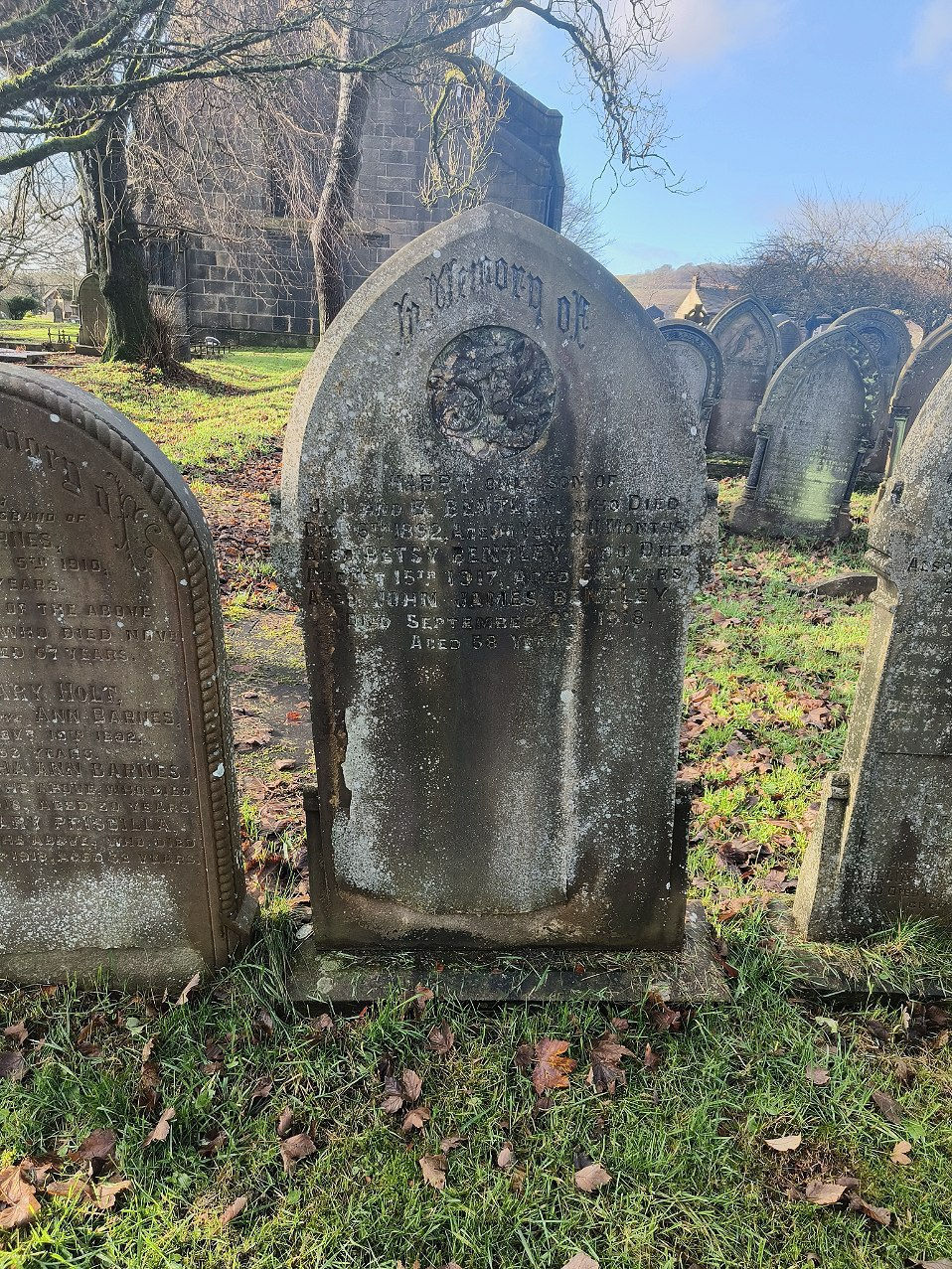
Bentley’s funeral at St Anne’s Church near Turton’s ground was attended by footballing heroes like Billy Meredith and when Charlie Sagar died in Chapeltown the following year, he was buried in the same churchyard. By the time star England international Nat Lofthouse was buried there almost a century later, few outside a small core of committed football historians would recognise Turton’s contribution to the game. It is these historians, such as former Turton FC player Peter Swain, who have done much of the work in recovering Turton’s contribution to shaping the game.
By the interwar years, this contribution was largely over. Football had moved on and Turton was left behind. As the twentieth century loomed, Dixon, the founder of the club, reflected wistfully on Turton’s heyday ‘when football was played as a sport, and not as a gigantic business, tending to crush the game out of the little village that first gave it birth’. Like Bentley and Sagar, he had lived to see Turton fade into obscurity while the game that it had done so much to shape expanded meteorically across the globe. A century on from the brutal mob football affair at Turton, the first World Cup was held in 1930, symbolising football’s transition from an unruly village pastime to a glamorous international phenomenon.
Nonetheless, in the global dominance of football and the success of Manchester United, there are fragments of Turton, and a game now played the world over owes something to this small village at the foot of the West Pennine moors.
Further Reading:
Peter Swain, The Emergence of Football: Sport, Culture and Society in the Nineteenth Century (Routledge, 2020).
Steve Tongue, Lancashire Turf Wars: A Football History (Pitch Publishing, 2018).
Keith Dewhurst, Underdogs: The Unlikely Story of Football's First FA Cup Heroes (Yellow Jersey, 2012).
Gary James, The Emergence of Footballing Cultures: Manchester, 1840–1919 (Manchester University Press, 2019).
W.T. Dixon, History of Turton Football Club and Souvenir of Carnival and Sports (Turton Football Club, 1909).
Jude Rowley is joint Co-Ordinating Editor of EPOCH History Magazine and an Associate Lecturer at the University of Exeter. His PhD thesis on the disciplinary history of International Relations in the nineteenth and twentieth centuries was completed at Lancaster University and is currently awaiting examination. Beyond this research, he is interested in revisiting forgotten histories of Lancashire and beyond. He has also represented Chapeltown ward on North Turton Parish Council since 2021.


