


The Historical Novel: What is it, and what is it capable of?

Alex Shenstone │ University of Lincoln
My Creative Writing PhD combines a work of fiction with traditional academics. The primary component is a historical novel titled Twice Forgotten – the story follows the relationship William Strahan and Eliot Bradley as they traverse Second World War Britain, William as a soldier in the Durham Light Infantry, and Eliot as an essential barley farmer exempt from the frontlines. Standard third-person prose is blended with the epistolary (letter-writing) to create an authentic story, distinguished by its positive resolution. The purpose? To diversify away from the prejudicial tragedies of twentieth-century-set queer stories by creating an educational, intimate, and affirming reading experience – especially for those feeling disenfranchised by modern LGBTQ+ intolerance.
As such, the project has necessitated deep-dives into all manner of topics: British queer lives during the Second World War, barley farming, epistolary fiction, and the lived experiences of female Air Transport Auxiliary (ATA) pilots. However, one important avenue has been dissecting the origins, tenets, and potential impacts of the historical novel – not only to determine whether it was the most appropriate genre for my novel, but also to try and answer the following questions:
a) How do we define the historical novel?
b) What is the historical novel capable of?
Discovering the origins of the historical novel (also called historical fiction) is an exercise in following the trail of scholarly consensus – i.e., it is typically understood that Hungarian historian and critic Georg Lukács (György Lukács) first identified the historical novel in his 1937 work – aptly titled – The Historical Novel.

For instance, in his 2007 book Manifestos for History David Harlan delves into Lukács’ mentality on the French Revolution, the aftermath of revolutionary wars, and the rise of Napoleon – the variables which Lukács’ identify as foundational materials for the historical novel. To Lukács, these events go beyond being historical into being phenomenal in magnitude, and attributes this distinction to the status of ordinary people: as in, people viewing their own lives as more significant and important, making them feel more intertwined and impactful in the bigger picture of the world. Putting it simply: it is people – or rather characters – and their reactionary role which creates a distinction worthy of its own genre in fiction.
Professor John Marx also follows this thread of thought in his chapter ‘The Historical Novel After Lukács’ in the 2011 book Georg Lukács: The Fundamental Dissonance of Existence. He emphasises how Lukács’ has changed the way scholars perceive historical novels, by revealing a particular value beyond entertainment. These stories emphasise the person, the character, and how their individual journeys correlate with the nature and changes in wider society. As a result, they make themselves into a useful resource when academics are constructing the national allegories of our real world – a reminder of just how distinct and variable our histories can be.
If this was not convincing enough, at the 2011 Institute of History Research (IHR) Conference historian Matthew J. Phillpott stated outright that ‘Georg Lukács is generally regarded as the most influential critic of historical fiction’.
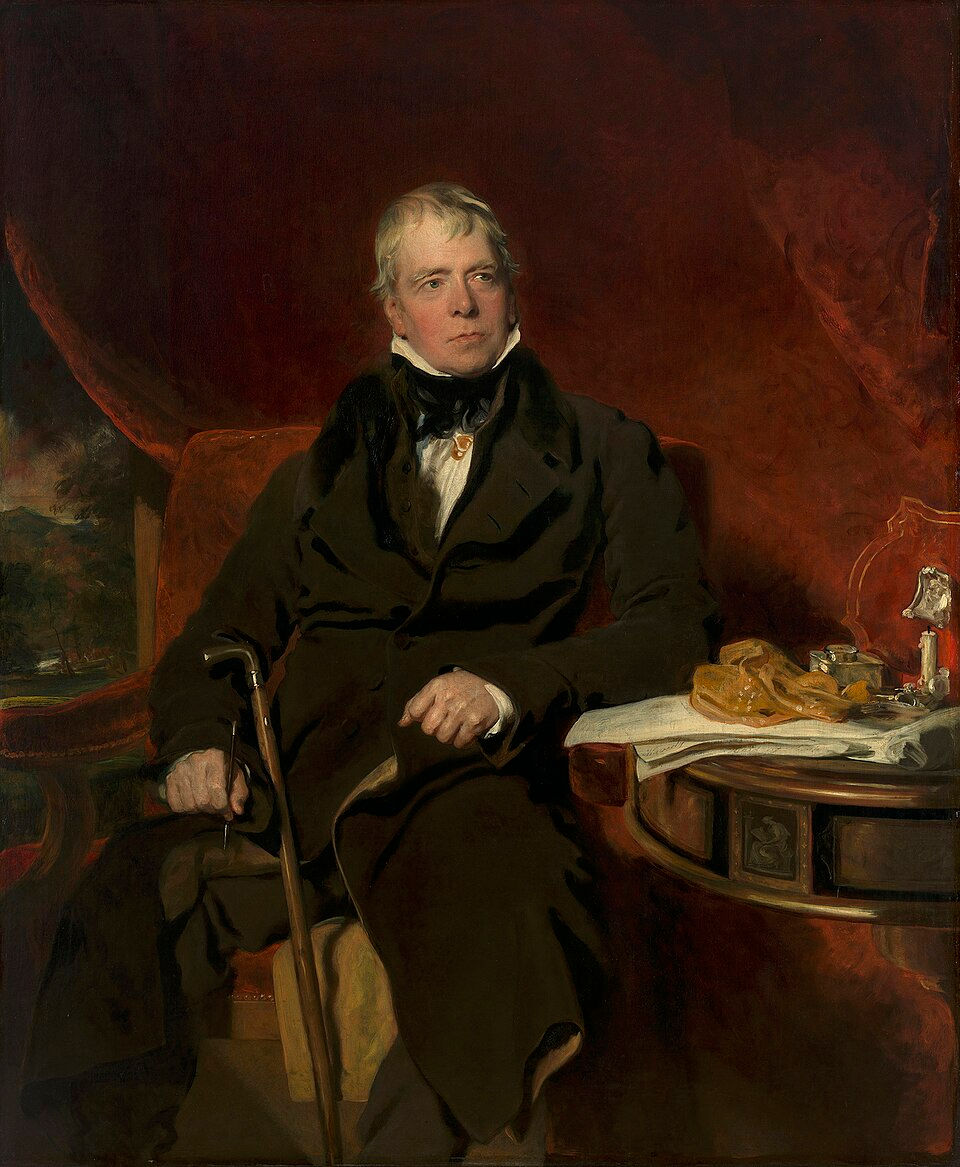
Now that Lukács’ influence has been substantiated, we can delve into it. In The Historical Novel, Lukács uses Sir Walter Scott’s 1814 novel Waverley; or, Tis Sixty Years Since as the leading example of his new genre. According to Lukács, Scott represented ‘the significant qualities of the '‘historical individual’ in such a way that it neglects none of the complex, capillary factors of development in the whole society’. Lukács isolated the significance of the individual and the importance of their interplay with the wider world. Instead of designing a close-ended definition for the historical novel, this is what Lukács determined:
What matters therefore in the historical novel is not the retelling of great historical events, but the poetic awakening of the people who figured in those events. What matters is that we should re-experience the social and human motives which led men to think, feel and act just as they did in historical reality.
This is the crux of the historical novel’s identity. The people take precedence over the historical narrative because the purpose of the genre is to incite empathy, relatability, and understanding in readers. This prioritisation of purpose over technicality is one which now pervades scholarly thought on the genre. In the introduction to the 1983 translated edition of Lukács’ work, Fredric Jameson argues that historical fiction does a necessary service in recognising ordinary people that popular history has ignored. As for the genre’s unique potential, in his 2010 book – also titled The Historical Novel – Dr Jerome de Groot identifies a variety of examples: articulating nationhood through the lens of the past, revealing just how subjective history’s narratives can be, and showcasing the importance of realistic writing as it relates to authenticity and attacking the conventions of historiography (the study of writing history & written histories).

Learning all of this helped me feel confident that a historical novel was the most appropriate format for Twice Forgotten. A perspective on Britain’s nationhood is presented through the dissolution of William Strahan’s patriotism as the traumas of the Second World War grow, following the Dunkirk evacuations of 1940. History’s subjectiveness is addressed primarily meta-textually; by showcasing the queer lived experience, a minority perspective is prioritised over the more common heteronormative historiographical convention. This also speaks to the novel’s authenticity, with the queer point of view having been directly informed by epistolary records (hence the use of letter-writing in the novel). One example is Stephen Bourne’s 2022 book Fighting Proud, which details the communications and accounts of various queer individuals serving historically in the UK armed forces. A couple Bourne showcases are Ralph Hall and Montague Glover – a couple separated during the Second World War – whose affectionate letters and telegrams from the time have been preserved.
The realistic representation of the queer joy in Twice Forgotten was imperative. I wanted to ensure its atypical happy-ending couldn’t be undermined by inaccuracies and prove that the tragic persecution of those like Alan Turing was not the only queer reality at the time. There is also the prevailing scholarly attitude that historical novels ought to tell a version of the truth. In a 2005 article for Rethinking History, Hayden White described how giving histories the ‘look’ of a novel not only represents a truthful past but also invites consideration as to what that truth means. Fifteen years later, for the same publication in 2020, Laura Saxton called truthful representation ‘integral’ to the success of historical novels. My novel’s truth is that despite the Second World War, homosexuality being illegal, and prevailing tragical histories, British queer people did enjoy long-term romantic relationships – a narrative direction which goes beyond the entertainment value of the novel.
In 2014 in the Prague Journal of English Studies, Ladislav Nagy highlighted how the genre has the ability to affect our more intimate, individual sense of self; going beyond entertainment, it creates the opportunity for us to reinterpret our identities. Nagy also spoke to the impact a novel inspires upon its readership and how the nature of that impact determines a novel’s success. For the historical novel, the potential impact is arguably exacerbated by its focus on personhood and the nuances of ordinary individuals. When people are prioritised, so too will readers feel prioritised, fostering a stronger bond with the narrative.
Ultimately, there is a great deal to consider when defining the historical novel. As Dr Grant Rodwell says in his 2013 book Whose History?: ‘the genre of historical fiction is continually expanding, adapting to new demands from readers and the creativity of authors’. Rodwell’s free-spirited view is consistent with the prior perspectives reviewed here, however he also contends that ‘any definition of historical fiction will take into account the purpose of the definition, and for whom it is intended’. Therefore, their potential to impact readers means all historical novels should arguably be defined individually, instead of moulding to a singular, pre-existing term.
For my purposes, I have come to define Twice Forgotten as a tribute to the overlooked, enduring queer love and lives which have been preserved in lesser known, epistolary records. This is done with the aim of fostering hope for queer love in readers who feel disenfranchised by the setbacks in LGBTQ+ tolerance occurring in the present day. Confirming whether an author’s intentions actually come to pass certainly demands further study, and taking a non-conformist approach to defining the genre may complicate further scholarly discussion. However, as for identifying the foundational principles and potential capabilities of the historical novel, I do have an answer. The historical novel is a breed of fiction which prioritises the people in its storytelling, and in doing so is able to make its readers feel more intimately understood. That is what the historical novel is capable of, and such an achievement has more nuance and humanity than any singular definition could ever have.
Further Reading:
Abby Coykendall and Ana de Freitas Boe (eds), Heteronormativity in Eighteenth-Century Literature and Culture (Ashgate Publishing Ltd, 2015).
Jerome de Groot, The Historical Novel (Routledge, 2010).
Georg Lukács, The Historical Novel, trans. Hannah and Stanley Mitchell (Beacon Press, 1963).
Grant Rodwell, Whose History? (University of Adelaide Press, 2013).
Walter Scott, Waverley; or, Tis Sixty Years Since (Archibald Constable & Co., 1814).
Alex Shenstone (BA Lincoln; MA Lincoln) is an author, Guest Lecturer and post-viva doctoral student at the University of Lincoln. His research centres on queer male-male romance representation in (mostly mid) twentieth century historical fiction, in addition to British queer historiography, and the general genres of historical & epistolary fiction.


