How did the British Empire Use Pomp and Circumstance to govern the Maltese Islands, 1800-1836?

Aleksa Andrejevic │King’s College London

‘Understood in this way as a conservative, traditional, ordered phenomenon, the British Empire was not exclusively about race or colour but also class and status. This in turn means that it was about antiquity and anachronism, tradition and honour, order and subordination, about glory and chivalry; horses and elephants, knights and peers, processions and ceremony…ostentation and ornamentalism’.
David Cannadine’s interpretation of the British Empire is particularly convincing when applied to British governance in India under the British Raj. Yet the British Mediterranean can also teach us much about this dynamic form of empire. The Mediterranean represents one of the earliest instances in which the British Empire attempted to employ aristocratic peerages as instruments of imperial administration. What makes this especially significant is that, before the British established a formal imperial peerage system in India, they had already experimented with this approach in the Mediterranean world. The Maltese Islands in particular served as early testing grounds for aristocratic governance within an expanding empire.
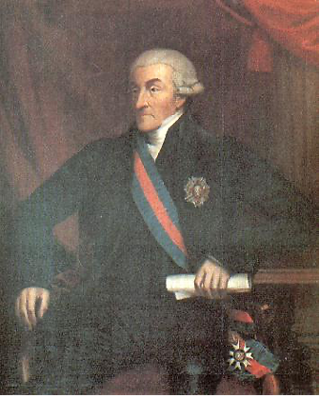
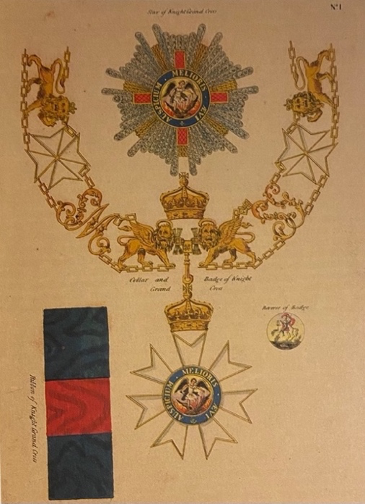
In 1818, Sir Thomas Maitland, then Governor of the Ionian and Maltese Islands, inaugurated the Order of St Michael and St George for the Ionian and Maltese nobilities. Its main objective was to establish a peerage for people of noble birth within these islands and for the administrators who governed them. Cannadine discusses the importance of the British peerage system in detail, arguing that it was critical in laying the foundations of a global British imperial peerage system that connected British subjects of noble birth from across the Empire to this imperial system. British peerages were also important in demonstrating the transition from what Vincent Harlow called the ‘first British Empire’ to the second, as they revealed the foundations of the Empire evolving from a system of settlement colonies to a global imperial identity. The British peerage system established a new method of integrating foreign aristocracies into a single imperial hierarchy, culminating in the Sovereign as head of all the noble hierarchies of the British Empire.
The Order of St Michael and St George can be seen as the first attempt to build an imperial hierarchy that integrated diverse indigenous nobilities within the British Empire. Similar to the Most Exalted Order of the Star of India (established in 1861) and the Most Eminent Order of the Crown of India (established in 1878), the Order of St Michael and St George was used to bind foreign aristocracies into the British imperial system by giving the illusion of power to foreign nobilities whilst at the same time reducing their actual power within their own territories. As Lord Elgin once put it, ‘in the colonies, premiers and chief justices fight for stars and ribbons like little boys for toys and scream at us if we stop them’. The Ionian Islands and the Maltese Islands were the first places where this aristocratic diplomacy was employed, and it ultimately failed in its primary objectives. Yet, it left a long-lasting legacy by creating the cultural foundations of an ‘Anglo-Maltese identity’.
This story was not as simple as it may sound, as evidenced by the case of British Malta. Between 1800 and 1836, Britain struggled to determine how to perceive Maltese civilisation. This problem led to a disagreement between the Maltese nobility and the British administrators over who held the legal legitimacy to govern the Maltese Islands. This question would lead to one of the most unique relationships in British imperial history.
To understand the origins of the Order of St Michael and St George in Malta, we must develop the ideas outlined above regarding legitimacy in the Maltese Islands. Britain’s relationship with Malta was unique in that it regarded Malta as an island situated in both the Occident (the West) and the Orient (the East). Malta was thus regarded as a gateway between the West and the East. Its oriental roots derive from its people, who spoke Maltese, which the British perceived as ‘broken Arabic’, and from the island’s ancient origins as a Carthaginian colony. Up until the twentieth century, some British administrators still believed that the Maltese language originated from ancient Punic. The eighteenth-century grand tourist, Patrick Brydon, also stated that Malta’s mythical origins stemmed from its having been ruled by an African Prince named Battus of Malta, thereby cementing its classical roots with North Africa and the Orient. These perceptions of Malta would appeal to British imperialists who believed that the Maltese people had never experienced Athenian liberty as the Ionian Islanders had. Still, Malta was also considered Occidental for many reasons. For most of its modern history, Malta was seen as a feudal fiefdom to the European Powers. Its acquisition by conquest in 1283 granted the Crown of Aragon feudal rights over the islands until they were lent to the Knights of the Order of St John and Jerusalem in 1530. This was seen by the British as evidence that the Maltese nobility had never ruled the Maltese Islands. It was the Europeans who built the great fortresses of the Grand Harbour. The Great Siege of 1565, in which the Knights of St. John defeated the Ottoman Empire, was regarded by the European Powers as a victory for Christian civilisation. Thus, Malta cemented itself as a bastion of Christian civilisation, a fact that the British Empire recognised in the eighteenth and early nineteenth centuries.

When the British acquired Malta from the French Republic on 4 September 1800, following a request by the Maltese National Assembly to blockade French ships and assume a protectorate over the islands, they believed they had conquered the islands from the French. This was not only a matter the Maltese nobility disputed but also one that British imperialists themselves debated, indicating that the British Empire was considering the appropriate means of governing colonial territories and protectorates after the French Revolution of 1789. In the eyes of some, the Maltese people were unconquered. British civil servants and engineers such as William Eton, John Dillon, and Charles William Pasley held opposing views that challenged the British Government at the time, and their writings show that some British imperialists advocated liberal reform within the British Empire. In 1811, Charles William Pasley, a well-known Royal Engineer during the Napoleonic Wars, argued that the British had promised the Maltese people the right to govern their own islands under Britain’s protection but had broken that promise by signing the Treaty of Amiens in 1802. This treaty sought to establish Malta as a neutral principality under the Order of Malta, an agreement concluded with the French Republic - the very people the British had defeated in Malta. The Maltese nobility found this unacceptable, and Pasley was aware of this, arguing that if Britain did not honour its promises to the Maltese nobility, governing the naval base would be extremely difficult. John Dillon also advanced this argument, but within Westminster, arguing in 1807 that the British public had the right to know whether their liberty was being upheld in their territories.


Pressure on the British government to adopt more liberal policies increased because of the disruptive behaviour of William Eton, the former superintendent of the quarantine in Malta. Eton argued that the Maltese nobility had, in fact, ruled Malta since the medieval period, based on evidence of an ancient Concilio Popolare. This popular council was seen to govern, to varying degrees, the local affairs of the Maltese people during the period of Aragon rule, until its abolition by the Order of Malta in the late eighteenth century. In 1811, the Maltese nobility, sent a petition to Sir Hilderbrand Oakes, the then Civil Commissioner of Malta, which stated ‘The people of Malta and Gozo have been a free people from the remotest times to which their history or tradition extends…they have been governed by written laws, put into execution by magistrates of their electing, and no person, of any rank or office whatever, had authority to exercise any legislative or executive function of his own will or power farther than what the law ordains’.
The challenge of liberalism was met with hostility and deliberately suppressed, despite the demands of radical Whigs such as William Eton. Sir Hilderbrand Oakes declared some sections of the Maltese nobility a security threat, warning Lord Bathurst that ‘extreme measures’ would be needed if this threat was to be managed. By 1813, Malta was declared a Crown Colony without an advisory council and was instead ruled solely by a military governor. In the eyes of High Tories like Oakes, the Concilio Popolare was deemed to be a fiction in terms of the power it had historically possessed. Unlike Britain's attempt in Sicily in 1811 under Lord William Bentinck, the British administrators of Malta challenged the principles of liberal imperialism and disregarded the legitimacy claims held by the Maltese nobility.
The first governor general of Malta was Sir Thomas Maitland, whose hostility towards liberalism and democracy led him to agree to the creation of the Order of St. Michael and St. George for the Maltese and Ionian Island subjects. Unlike in the Ionian Islands, the Maltese nobility did not establish a parliamentary system under Sir Thomas Maitland's administration. It could have been due to differences in classical history between Malta and the Ionian Islands: the Carthaginians ruled one, and ancient Athens ruled the other. Thus, the peerage was deliberately used in Malta to pacify the Maltese nobility, who were believed to be influenced by liberal principles with which Malta was not historically acquainted. Maitland wrote of the Maltese representatives of the former Maltese National Assembly:
‘When we first took possession of this Island there was over every village… a Syndic… but Mr Cameron … or Sir Alexander Ball thought fit to make those magistrates Lord Lieutenant in all their Villages the result of which is equally ridiculous and absurd as you have men of the Dregs of the people… dressed in fine uniforms and each acting the part of a little Tyrant in his own Jurisdiction…’.
Maitland knew that incorporating the Maltese nobility into this peerage would satisfy their liberal demands with pomp and symbolic status, thereby eliminating the political influence they sought between 1800 and 1813. Class and status would be used to eliminate the liberal forces taking hold within the Maltese islands. This strategy would inevitably fail, but it started with modest success.
On 16 December 1818, the first Maltese nobles were honoured with the Order of St. Michael and St George at the Governor’s Palace in Valletta. Sir Giuseppe Borg Olivier, Sir Raffael Xerri, Sir Giuseppe Nicolo Zammit and Count Paolo Paraiso were honoured at different ranks of the peerage. Later, in January 1822, Sir Giuseppe Vincenzo de’ Marchesi Testaferrata and Sir Vincenzo Casolani were also honoured with the peerage. These figures represented the upper echelons of Maltese society and the people with whom the British could ally. Sir Giuseppe Nicolo Zammit was the first Maltese to serve as pro-secretary to Sir Alexander Ball, which placed him at the centre of British governance in Malta. The peerage was also crucial in establishing legitimacy for the Maltese aristocracy, as some British administrators had gone out of their way to delegitimise the noble status of most Maltese noble families. Count Paolo Paraiso was one of these aristocrats whom Sir Hilderbrand Oakes had rejected, arguing that there was no proof of the origins of his titles. Many other nobles faced the same delegitimisation by Oakes, especially those who signed the 1811 Petition.


The Order of St Michael and St George also brought the Maltese aristocracy into the cultural spheres of the British establishment in Malta. For example, on the evening after the first investiture, Sir Thomas Maitland hosted a state ball for more than 500 people, while knights of the new Order had been invited to socialise with dignitaries such as Sir Charles Penrose, the head of the Mediterranean fleet. This also occurred with the arrival of the second Governor General of Malta, the Marquis of Hastings, as the Maltese nobility, represented by Sir Paolo Parisio and Baron Sciberras Trigona, greeted the new Governor when he arrived in the Grand Harbour of Valletta in 1824. These networking and traditional ceremonies in Malta were crucial in giving the Maltese Nobility the illusion of power, a power that was rapidly diminishing.


Was this aristocratic diplomacy a success for the British Empire in Malta? For the first thirteen years, the peerage had managed to pacify some members of the Maltese aristocracy, especially those within the Maltese judiciary. Still, it soon gave way to more liberal demands for representative government, led in 1831 by the Maltese gentleman Georgio Mitrovich. The reason for this failure was a crucial change in principle among the Maltese nobility: they no longer regarded their right to govern the Maltese Islands as an ancient aristocratic right but as a democratic right! The British believed that if they accorded the Maltese nobility the pomp and circumstance of nobility, they would become content with their aristocratic position within the Empire; however, by the 1830s, liberalism had become the standardised movement across Europe, and democratic legitimacy had trumped aristocratic legitimacy.
By 1835, Malta had established its first semi-representative government, which the Whig Government of Lord Grey regarded as the only means of pacifying the Maltese nobility once more. The strategy for appeasing the Maltese nobility changed forever. Although the Order of St Michael and St George failed to pacify the Maltese nobility permanently, it played a crucial role in developing an imperial system focused on consolidating aristocratic hierarchies across the British Empire. Malta thus served as an early testing ground for the ornamental structures that would later define British imperial governance in the nineteenth and twentieth centuries.
Further Reading:
C.A. Bayly, Imperial Meridian (Routledge, 1989).
David Cannadine, Ornamentalism: How the British Saw Their Empire (Penguin, 2001).
Robert Holland, The Warm South: How the Mediterranean Shaped the British Imagination (Yale University Press, 2020).
Hilda Lee, Constitutional History of Malta 1800-1914 (Whitelocke Publications, 2020).
Uday Singh Mehta, Liberalism and Empire: A Study in Nineteenth – Century British Liberal Thought (University of Chicago Press, 1999).
Aleksa Benjamin Andrejevic is a doctoral researcher in the Department of War Studies at King’s College London, where his work explores the relationship between imperial administration, intellectual discourse, and foreign policy in the early nineteenth-century Mediterranean. His research examines how British elites understood, envisioned, and governed the Mediterranean from 1793 to 1830, arguing that this region served not only as a strategic space but also as a vital cultural and intellectual landscape within the broader development of the British imperial imagination. In addition to his doctoral research, Aleksa serves as a Graduate Teaching Assistant in the Department of War Studies, where he teaches on the undergraduate module The Long View: Understanding International Relations through History.